EN
EN AR
AR FR
FR DE
DE HI
HI IT
IT JA
JA KO
KO PT
PT RU
RU ES
ES ID
ID LV
LV VI
VI HU
HU MS
MS GA
GA BE
BE YI
YI EU
EUWhat are the application fields of tungsten crucibles?
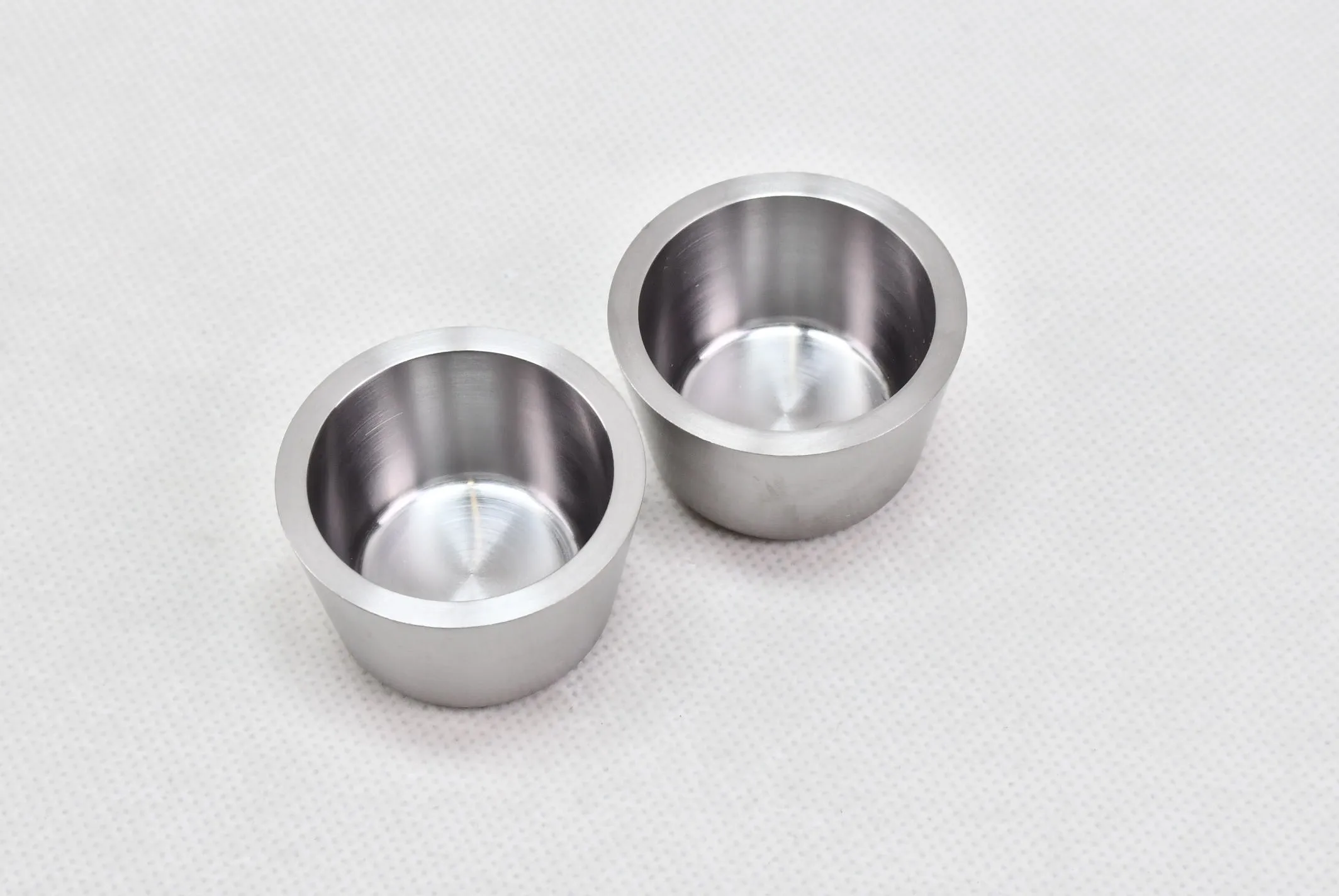
Tungsten crucibles are high-performance containers made of pure tungsten or tungsten alloys, valued for their ultra-high melting point (3422°C), excellent thermal stability, corrosion resistance to molten metals/alloys, and low contamination. These properties make them indispensable in high-temperature metallurgy, crystal growth, and advanced material processing. Below are their core application fields with detailed scenarios and technical requirements:
1. Single Crystal Growth (Semiconductor & Optoelectronics)
This is the largest and most critical application of tungsten crucibles, driven by the demand for semiconductor wafers and optoelectronic materials.
Key Scenarios:
Silicon single crystal growth: Used in the Czochralski (CZ) process to hold molten silicon (melting point ~1414°C). Tungsten crucibles replace traditional quartz crucibles in some high-purity scenarios, as they avoid silicon contamination from quartz dissolution.
Compound semiconductor growth: For growing GaAs, InP, GaN, and other III-V compound crystals (widely used in LEDs, laser diodes, and microwave devices). These materials require ultra-high purity and stable high-temperature environments, which tungsten crucibles can provide.
Optical crystal growth: For melting and shaping sapphire (Al₂O₃, melting point ~2072°C), YAG (yttrium aluminum garnet), and other optical crystals used in lasers and aerospace sensors.
Technical Requirements: High purity (≥99.95% W), smooth inner surface (Ra ≤ 0.4μm), and resistance to thermal shock (to prevent cracking during rapid heating/cooling).
2. High-Temperature Metallurgy & Alloy Smelting
Tungsten crucibles are ideal for smelting high-melting-point, active metals and special alloys that cannot be contained by conventional crucible materials (e.g., graphite, alumina).
Key Scenarios:
Rare metal smelting: Melting titanium, zirconium, tantalum, niobium, and other refractory metals. These metals are highly reactive at high temperatures and will not react with tungsten.
Precious metal processing: Casting gold, silver, platinum, and their alloys. Tungsten crucibles do not contaminate precious metals, ensuring the purity of the final product.
Special alloy preparation: Smelting high-temperature alloys (e.g., nickel-based superalloys for aircraft engines) and magnetic alloys, where strict control of impurity content is required.
Technical Requirements: Thicker wall design (to withstand high-temperature mechanical stress) and resistance to corrosion by molten metal.
3. Vacuum Coating & Thin-Film Deposition
In vacuum coating processes, tungsten crucibles act as evaporation sources for coating materials.
Key Scenarios:
Thermal evaporation coating: Used in vacuum coating equipment to heat and evaporate metals (e.g., aluminum, copper, chromium) or oxides, depositing thin films on substrates such as glass, plastics, or semiconductor wafers. Applications include reflective films, conductive films, and decorative coatings.
Sputtering target preparation: Tungsten crucibles are used to melt and cast sputtering targets (e.g., tungsten targets, molybdenum targets) for semiconductor chip metallization.
Technical Requirements: Good thermal conductivity, precise dimensional tolerance, and compatibility with vacuum environments (low outgassing rate).
4. Aerospace & Nuclear Energy
The extreme environment resistance of tungsten crucibles makes them suitable for aerospace propulsion and nuclear reactor systems.
Key Scenarios:
Rocket engine components: Used in the combustion chambers or propellant storage parts of some high-thrust rocket engines, where they withstand ultra-high temperatures generated by fuel combustion.
Nuclear reactor applications: As containers for nuclear fuel pellets or as part of the reactor core’s heat transfer system. Tungsten’s high melting point and low neutron absorption cross-section make it a candidate material for advanced nuclear reactors.
Technical Requirements: Radiation resistance, high-temperature creep resistance, and compatibility with nuclear fuel or propellants.
5. Laboratory & Scientific Research
Tungsten crucibles are essential tools in material science and chemistry laboratories for high-temperature experiments.
Key Scenarios:
High-temperature sample sintering, melting point testing, and phase change experiments of materials.
Synthesis of advanced ceramic materials (e.g., silicon carbide, boron carbide) and composite materials under high-temperature conditions.
Technical Requirements: Small size customization, easy cleaning, and compatibility with various heating methods (e.g., induction heating, resistance heating).
6. Solar Energy Industry
In the production of solar cells, tungsten crucibles are used for melting and doping silicon ingots, ensuring the purity of silicon materials and improving the conversion efficiency of solar cells.
Key Advantages Over Alternative Crucible Materials
|
Material |
Melting Point |
Contamination Risk |
Thermal Stability |
Application Limitation |
|
Tungsten |
3422°C |
Very low |
Excellent |
High cost; brittle at room temperature |
|
Graphite |
3652°C |
High (reacts with active metals) |
Good |
Oxidizes in air above 600°C |
|
Alumina |
2072°C |
Medium |
Moderate |
Reacts with molten alkali metals |
|
Quartz |
1750°C |
High (dissolves in molten silicon) |
Poor |
Low thermal shock resistance |